

TL;DR
- Question: What is a zero trust microsegmentation checklist for regulated NJ & NY businesses?
- Answer: Microsegmentation isolates workloads into smaller zones and enforces least‑privilege network policies to reduce lateral movement. This checklist maps assets, defines zones, applies least‑privilege rules, tests via canaries, and integrates controls for compliance (NYDFS 23 NYCRR 500 and HIPAA).

Why Microsegmentation Matters for Regulated NJ & NY Businesses
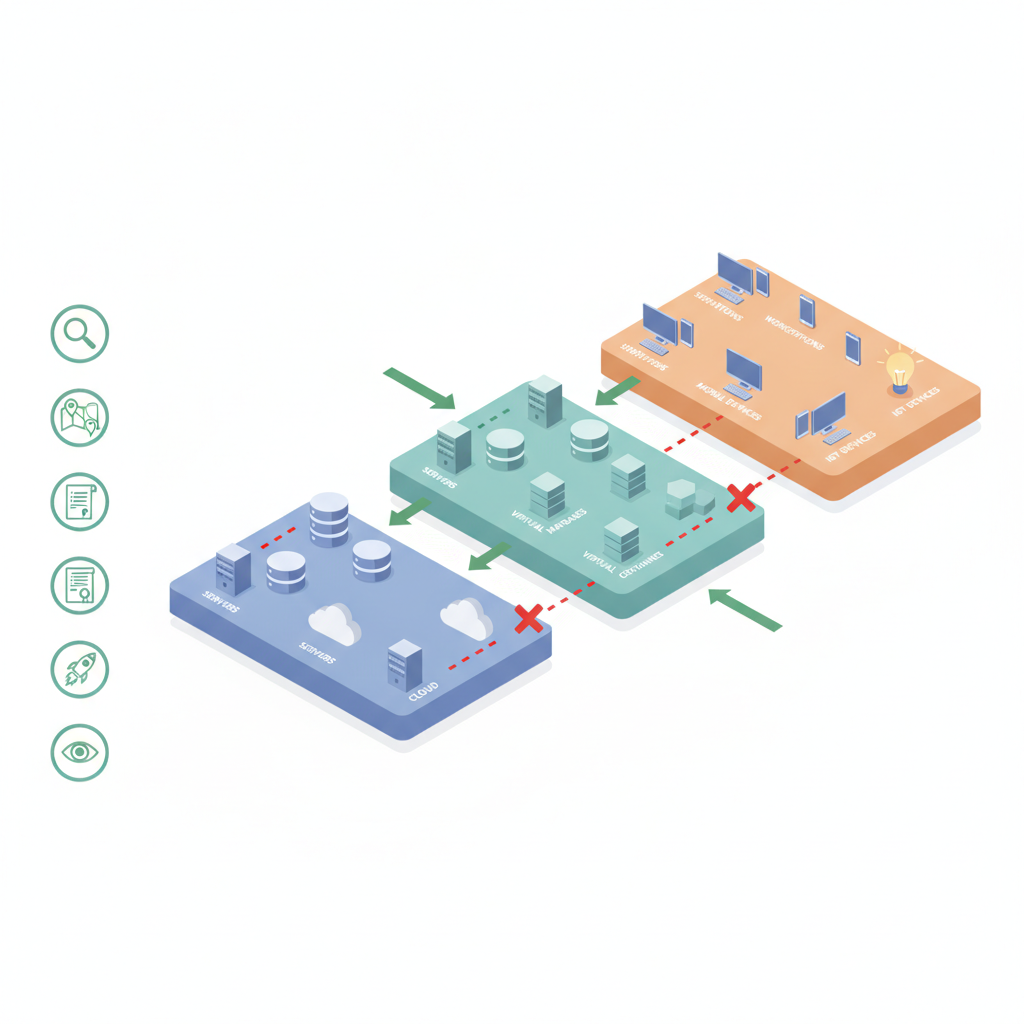
Microsegmentation isolates workloads into smaller zones and enforces least‑privilege network policies to reduce lateral movement. For regulated businesses in New Jersey and New York, microsegmentation is not just security hygiene — it supports regulatory requirements such as NYDFS Cybersecurity Regulation (23 NYCRR 500) which calls for risk‑based access controls and segmentation examples to limit unauthorized access.
If you handle protected health information or financial records, segmentation reduces the blast radius when a workstation or cloud workload is compromised. A hospital network might place EHR servers in a tightly restricted zone, allow only specific application ports from application servers, and block lateral SMB traffic between workstations and servers. For a small financial firm in Newark or a clinical provider in Manhattan, that same pattern prevents credential theft from converting into a full domain compromise.
Quotable: "Segmentation turns a single breach into an isolated incident, not a full network outage."
Key Concepts: Zones, Workloads, Policies
Zones are logical groupings (for example: user endpoints, application servers, databases, and vendor jump hosts). Workloads are the specific services or machines inside those zones (an SQL database, an Apache web app, a backup appliance). Policies define allowed flows between zones and workloads, specifying protocol, port, and identity context. For compliance‑driven teams, label zones by risk (e.g., PHI, PCI, general) and enforce identity-aware rules rather than relying on IP ranges alone.
Example: label a payroll database zone as "PCI‑sensitive" and allow copying only from an application server zone over encrypted connections; block any direct workstation traffic. Use identity context (service accounts, workload certificates) to tighten rules.
Design zones by business function, not by IP subnet, to keep policies durable as infrastructure changes.
Pre-Implementation Steps
Before you apply rules, prepare artifacts: an asset inventory, a network map, traffic baselines, a policy governance owner, and a rollback plan. Engage compliance stakeholders (privacy officer, legal, and line managers) to map which data stores are regulated under NYDFS 23 NYCRR 500 or HIPAA. Decide whether to pilot microsegmentation in a single business unit or across your entire estate.
Practical timeline: plan a 30/60/90 day phased rollout — pilot, evaluate, expand. Identify a senior engineer (or engage a Managed IT & Cybersecurity provider) to run the pilot and document acceptance criteria for each phase.
Inventory and Asset Classification
Inventory every asset that touches regulated data: servers, VMs, containers, SaaS integrations, vendor access points, and IoT devices. Classify assets by sensitivity (PHI, PII, financial) and by trust level (managed endpoint, unmanaged contractor laptop). Produce a CSV with fields: hostname, owner, role, data classification, criticality, and remediation owner. For example: "ehr-db-01, Clinical IT, Database, PHI, High, Alice Gomez." This CSV becomes the single source for labeling zones and building policy exceptions.
Baseline Network Mapping and Traffic Flows
Record actual traffic flows for 30 days using flow logs (NetFlow, VPC Flow Logs) and packet captures for critical paths. Identify top talkers and unexpected flows (workstations talking to databases, legacy admin ports open). Translate those observations into an allowlist that represents real behavior; use that allowlist as a starting point for policy creation. Keep P95 connection duration and peak port usage as numerical checks when validating later.
Microsegmentation Implementation Checklist (Step-by-Step)
Use this actionable microsegmentation checklist to move from inventory to enforced policy. Each step contains a clear artifact and a recommended timeline.
| Action | Artifact | Timeline |
|---|---|---|
| 1. Inventory & classify assets | CSV asset register | 30 days |
| 2. Baseline traffic flows | NetFlow/raw logs report | 30 days |
| 3. Define policy goals & risk tiers | Policy matrix | 60 days |
| 4. Create zones and labels | Zone catalog | 60 days |
| 5. Deploy policies in monitor-only | Policy audit logs | 60–90 days |
| 6. Enforce with canaries and test | Canary test report | 90 days |
| 7. Integrate with EDR/SIEM/IDP | Integration playbook | 90 days |
Enforce policies in monitor-only mode first; sudden enforcement without testing causes outages.
Define Segmentation Policy Goals (Compliance & Risk)
Translate compliance controls into policy goals: restrict access to PHI stores to named services and administrators; log all access attempts for six months; require MFA for vendor access. Example KPIs: reduction in cross‑zone lateral connections by 90%, 100% of PHI flows logged, and zero unauthorised admin connections after enforcement. Map each goal to a measurable artifact and a responsible owner.
Create Segmentation Zones and Labels
Create a zone catalog that includes a short description, data classification, allowed ingress/egress, and owners. Use labels like: zone=app:payroll, data=financial, owner=Finance. Keep the catalog under version control and expose it to the SIEM so alerts can automatically reference zone names in incident tickets.
Apply Least-Privilege Access Rules
Implement least‑privilege rules that specify exactly which service identities may connect, on which ports, and under what conditions (time, device posture). For example, only the backup service account may speak to backup targets on port 443 between 02:00–04:00. Use conditional rules where possible — allow access only from managed endpoints with EDR present.
Test with Canary Workloads and Simulated Attacks
Deploy canary workloads that simulate user and attacker behavior. Run lateral movement red-team scenarios and measure whether microsegmentation stops privilege escalation. Document failed attempts and tune policies until legitimate traffic is unaffected but suspicious flows are blocked. Keep a rollback plan for any policy that causes business disruption.
Integration with EDR, SIEM, and Identity Controls
Microsegmentation is effective when tied to endpoint telemetry and identity systems. Forward segmentation events to your SIEM and correlate them with EDR alerts to detect suspicious patterns faster. Use identity providers (Okta, Azure AD) to map user context into policies: block access from users with risky sign-ins. Integrations create automated responses — for example, quarantining a workload in response to a high‑confidence EDR detection.
Validation, Monitoring & Ongoing Maintenance
Validation is continuous: monitor policy hit rates, false positives, and change requests. Maintain a policy review cycle (quarterly) and an audit log retention policy that meets NYDFS and HIPAA requirements. Track metrics such as number of cross‑zone deny events per week and time to remediate policy exceptions — set targets like remediation within 72 hours for high‑risk exceptions.
Audit Trails and Reporting for Compliance
Guarantee that all segmentation decisions are logged and that logs include identity, source, destination, and rule matched. Produce quarterly compliance reports that map policies to 23 NYCRR 500 sections and HIPAA safeguards; retain logs for the period required by your regulator. Use these reports in audits to demonstrate risk‑based controls.
Common Pitfalls and How to Avoid Them
Common mistakes include: enforcing too quickly, relying on IP ranges instead of identity, and forgetting vendor access patterns. Avoid outages by starting with monitor‑only mode, testing canaries, and documenting exceptions. Keep a clear change management process and a technical owner for policy reviews to prevent drift and excessive rule bloat.
Recommended Tools and Vendor Considerations
Choose solutions that support identity‑aware policy, integration with EDR/SIEM, and visibility across cloud and on‑prem workloads. Consider managed support for day‑to‑day operations if you need senior‑engineer‑led monitoring and response. For regulated NJ & NY SMBs, engaging a Managed IT & Cybersecurity provider can accelerate compliance while keeping internal teams focused on the business.
Conclusion: Quick Action Plan for NJ & NY Regulated SMBs
Start with inventory and traffic baselining, then pilot microsegmentation in a single high‑risk zone for 30–60 days. Move policies from monitor‑only to enforcement after successful tests with canary workloads. Keep integration with EDR and SIEM and document controls for NYDFS (23 NYCRR 500) and HIPAA audits. For hands‑on execution, review our services or schedule a demo at our services. For questions about readiness, contact us, review the team at contact us, or use contact us to arrange a free assessment.
FAQ
What is zero trust microsegmentation checklist for regulated nj & ny businesses? Microsegmentation isolates workloads into smaller zones and enforces least‑privilege network policies to reduce lateral movement; the checklist maps inventory, baselines traffic, defines zones, tests policies with canaries, and integrates with EDR/SIEM for compliance with NYDFS 23 NYCRR 500 and HIPAA.
How does zero trust microsegmentation checklist for regulated nj & ny businesses work? The checklist works by first capturing real traffic and asset data, then converting that data into allowlist policies enforced by identity‑aware controls; testing and monitoring ensure business operations continue while unauthorized lateral flows are blocked. For more on this, see Mssp for regulated businesses nj ny.